
Your Professional Ribbed V-Belt Manufacturer in China!
Our factory is a professional factory producing rubber belts, We are one of the leading manufacturers in the research, design, manufacturing, and distribution of various power transmission belts in China.
Why Choose Us
Wide Product Range
Our products cover Auto Transmission belts such as cogged V-belts, Ribbed V-belts, timing belts, Industrial transmission belts such as REL&REP belts, etc.
Broad Market
Our products are exported to dozens of countries/regions in Southeast Asia, the Middle East, Africa, and the United States.
Advanced Equipment
Our factory independently manufactures and improves equipment, adheres to technological innovation, and independently develops and introduces advanced equipment.
Professional Service
We have an experienced and professional customer support team to provide flexible service to customers around the world, giving full support from product design to marketing.
-

6PK BELTS
6PK belts are a type of automotive drive belt commonly used in modern vehicles. They are part of Add to Inquiry -
Ribbed Drive Belts
Ribbed drive belt, also known as multi-rib belts or serpentine belts, are a type of automotive Add to Inquiry -
Power V Belts
Power V belt, also known as V-belts or V-ribbed belts, are a type of industrial drive belt that Add to Inquiry -
Rib V Belts
Rib V belt, also known as multi-ribbed belts or micro-V belts, are a type of power transmission Add to Inquiry -
CR Belts
CR belt, also known as chloroprene belts or neoprene belts, are a type of power transmission belt Add to Inquiry -
Transmission V Belts
Transmission V belt, also known as V-belts or Vee belts, are a type of power transmission belt that Add to Inquiry -
Drive Ribbed Belts
Drive ribbed belt, also known as poly-V belts or multi-rib belts, are a type of power transmission Add to Inquiry -
Belt 12 PL
The Belt 12 PL is a high-quality power transmission belt that is designed for efficient and Add to Inquiry -
Small V Belts
Small V belts are high-quality power transmission belts designed for efficient and reliable Add to Inquiry -
Ribbed Belt PH PM
The RIBBED BELT PH PM is a high-quality power transmission belt designed for efficient and reliable Add to Inquiry


Definition of Ribbed V-Belt
The V-ribbed concept combines some of the best features of flat belts and V-belts. It employs what is essentially a flat belt with a series of V-shaped ribs running the length of the belt on the driving surface. These thin belts operate efficiently and can run at high speed. But even more important, tensile cords have total support because the belt ribs bottom completely on the sheave. The total support of the cord permits high load-carrying capacity. Theoretically, this design could provide the highest capacity of any belt if reinforced with high-strength fiber.
How Does Ribbed V-Belt Work
The V-ribbed belt is a further development of the V-belt and works according to the same principle: It acts as a transmission belt, connects the V-belt pulleys and transmits the force from the engine to the ancillary components including the alternator, the hydraulic pump for the power steering, the air conditioning compressor, the fan and the water pump.
In a combustion engine, the combustion of the air/fuel mixture drives pistons. Via connecting rods, the movement of these pistons in a straight line is converted into the rotation of the crankshaft. The V-belt uses the force from the rotation (torque) of the crankshaft and drives additional units via V-ribbed belt pulleys. As such it is responsible for the correct operation of the engine and high levels of ride comfort. The V-ribbed belt has an advantage over the V-belt in that it is able to transmit the torque from the engine to several units at the same time.
Feature of Ribbed V-Belt
Ribbed V-belts, also known as multi-rib belts or serpentine belts, offer several advantages over traditional V-belts. Here are some key features of ribbed V-belts:
Increased Power Transmission: Ribbed V-belts provide a higher power transmission capacity compared to standard V-belts of the same width. The multi-rib design distributes the load more evenly, allowing for greater torque transfer.
Efficiency: The ribbed design provides better contact and increased surface area between the belt and pulleys, resulting in higher efficiency and reduced energy loss.
Space-Saving: Ribbed V-belts allow for compact designs due to their thinner profile. This makes them suitable for applications where space is limited, such as in modern vehicles with multiple accessories.
Reduced Slip: The multiple ribs on the belt provide better grip on the pulleys, minimizing slippage even under heavy loads or high-speed conditions.
Quieter Operation: Since ribbed V-belts have multiple smaller ribs instead of a single larger one, they run more smoothly and generate less noise compared to traditional V-belts.
Longer Service Life: Ribbed V-belts are designed to be more resistant to wear, heat, and elongation. They are often constructed using durable materials that can withstand high temperatures and harsh environments, resulting in extended service life.
Maintenance-Friendly: Due to their design and improved performance characteristics, ribbed V-belts generally require less maintenance and tension adjustment compared to standard V-belts.
Versatility: Ribbed V-belts can be used in a wide range of applications, including automotive engines, industrial machinery, and appliances. They are suitable for transmitting power to multiple accessories simultaneously, such as alternators, air conditioning compressors, and power steering pumps.
Ribbed V Belts for Car

Improved Power Transmission
The primary advantage of using ribbed V-belts in cars is their superior power transmission capabilities. The ribs on the underside of the belt allow it to grip the pulley more effectively, resulting in a smoother and more efficient transfer of power. This increased efficiency translates to better performance and fuel economy, making ribbed V-belts a popular choice among car manufacturers.

Reduced Slippage
Slippage is a common problem with standard V-belts, especially in high-torque applications. However, ribbed V-belts have a much lower slippage rate, which makes them ideal for use in high-performance cars. The increased grip provided by the ribs ensures that the belt stays in place, even under high torque loads, reducing the risk of slipping and increasing the overall efficiency of the system.

Improved Durability
Ribbed V-belts are typically made of high-quality materials, which makes them more durable than standard V-belts. The ribs on the underside of the belt also reduce wear and tear, ensuring that the belt lasts longer and requires less maintenance. This increased durability makes ribbed V-belts an ideal choice for cars that are used in harsh environments or subject to high levels of wear and tear.

Reduced Noise and Vibration
Another advantage of using ribbed V-belts in cars is the reduced noise and vibration that they produce. The ribs on the underside of the belt help to dampen vibration, which results in a smoother and quieter ride. This reduced noise and vibration also improve the overall driving experience, making ribbed V-belts a popular choice among car manufacturers.

Lower Maintenance Costs
The increased durability and reduced wear and tear of ribbed V-belts mean that they require less maintenance than standard V-belts. This reduced maintenance requirement translates to lower maintenance costs, making ribbed V-belts a cost-effective choice for car manufacturers. Additionally, the reduced need for maintenance also results in less downtime, which improves the overall productivity of the car.

Improved Fuel Economy
The improved power transmission and reduced slippage provided by ribbed V-belts result in better fuel economy. The increased efficiency of the system means that the car can produce more power while consuming less fuel, which translates to lower emissions and lower fuel costs. This improved fuel economy makes ribbed V-belts an ideal choice for car manufacturers looking to improve the environmental performance of their vehicles.
Applications of Ribbed V-Belt
Ribbed V-belts, also known as multi-rib belts or serpentine belts, find applications in a wide range of industries and equipment. Here are some common applications of ribbed V-belts:
Automotive: Ribbed V-belts are extensively used in automotive engines to drive multiple accessories such as the alternator, power steering pump, water pump, air conditioning compressor, and more. Their space-saving design and efficient power transmission make them ideal for modern vehicle designs.
Industrial Machinery: Ribbed V-belts are widely employed in various industrial machinery applications. They are used in equipment such as machine tools, conveyors, blowers, pumps, compressors, and generators, where simultaneous power transmission to multiple components is necessary.
Agricultural Equipment: Ribbed V-belts are utilized in agricultural machinery like combine harvesters, tractors, hay balers, and irrigation systems. They help drive components such as pulleys, fans, and various attachments used in farming operations.
HVAC Systems: Ribbed V-belts are employed in heating, ventilation, and air conditioning (HVAC) systems to power fans, blowers, and compressors. Their efficient power transmission, compact design, and reduced noise make them suitable for HVAC applications.
Home Appliances: Ribbed V-belts can be found in various household appliances such as washing machines, dryers, dishwashers, and vacuum cleaners. They help transfer power to different components within these appliances.
Printing Industry: Ribbed V-belts are used in printing machines to drive rollers and convey paper through the printing process. Their efficiency, durability, and quiet operation are advantageous in this industry.
Fitness Equipment: Ribbed V-belts are utilized in fitness equipment like treadmills, stationary bikes, and elliptical machines to transfer power from motors to the belt drive systems that control movement and resistance.
Construction Machinery: Ribbed V-belts are used in construction equipment such as concrete mixers, compressors, and pumps. They help drive rotating components and provide reliable power transmission in demanding construction environments.
Marine Applications: Ribbed V-belts are employed in marine engines to drive various accessories, including alternators, water pumps, power-steering pumps, and cooling fans.
Construction of Ribbed V-Belt
Outer Covering
The outer covering of a ribbed V-belt, sometimes referred to as the jacket, is a protective layer that is designed to withstand the demanding conditions within a belt drive system. It is typically made from a highly durable, fabric-like material that is resistant to wear, heat, oil, and weathering. Its primary purpose is to protect the inner components of the belt from external damage and to provide a certain degree of friction against the pulley. Different types of materials can be used for the outer covering of a ribbed V-belt, including:
Neoprene: This is a type of synthetic rubber that is resistant to oil, heat, and weathering. It is often used in V-belts designed for heavy-duty applications.
Polyester or Nylon Fabric: These materials are durable and offer good resistance to wear. They can be impregnated with other materials to improve their resistance to heat and oil.
Ethylene Propylene Diene Monomer (EPDM): This is another type of synthetic rubber that has excellent heat resistance and can be used in high-temperature applications.
The exact material used for the outer covering of a ribbed V-belt can vary depending on the specific application of the belt. For example, a belt designed for use in an automotive engine may have a different outer covering than a belt designed for use in a piece of industrial machinery. The outer covering can also be treated with special coatings or additives to enhance its performance in specific applications.
Tension Members/Cords
The tension members or cords in a ribbed V-belt are a crucial part of its construction. They provide the necessary tensile strength to handle the forces applied to the belt during operation, allowing it to transmit power from the driver pulley to the driven pulley(s). Without these tension cords, the belt would not be able to handle the load or maintain the necessary tension for efficient operation. Tension members are typically embedded in the core of the V-belt and are made of high-strength materials. The materials used can vary depending on the specific design of the belt and its intended application, but common materials include:
Polyester: Polyester cords offer good tensile strength and are resistant to elongation, which helps maintain the correct belt tension over time. They also provide good resistance to heat and other harsh conditions.
Aramid or Kevlar: These materials are extremely strong and offer high tensile strength, which can be useful for heavy-duty applications or high-load conditions. They also have excellent heat resistance.
Steel: In some cases, particularly in high-torque or industrial applications, steel cords may be used for their superior strength and durability.
The tension members in a V-belt are critical to its performance and durability. It's important that they are made from a material that can handle the stresses applied to the belt during operation, and that they are correctly positioned and bonded within the belt to ensure optimal performance.
Compression Section
The compression section of a ribbed V-belt is a critical component in its design. It is located below the tension members/cords and usually made from a flexible, rubber compound. The main function of the compression section is to allow the belt to bend around the pulleys without cracking or breaking. It helps to absorb shocks and vibrations during operation, reducing wear and tear on the belt and the machinery it's attached to. The rubber compound used in the compression section is formulated to be flexible yet strong, allowing it to endure the constant bending and flexing that occurs as the belt moves around the pulleys. It's also designed to handle the heat generated during operation without losing its structural integrity. The compression section essentially acts as a buffer between the tension members and the pulleys, absorbing stress and preventing direct contact between the cords and the pulleys. This increases the longevity of the belt and contributes to smoother, quieter operation.
It's important to note that the quality and construction of the compression section can vary depending on the manufacturer and the intended application of the ribbed V-belt. Some belts might include additional features or components in the compression section to improve performance in specific applications.
Undercord or Cushion Rubber
The undercord or cushion rubber is a crucial part of a ribbed V-belt's construction. It is located between the tension members (cords) and the compression section. This layer serves as a bonding agent, providing adhesion between the cords and the compression section, and also plays an important role in distributing load evenly across the belt. The cushion rubber is typically made of a flexible, resilient material that can absorb shocks and withstand the constant bending and flexing that occurs during operation. It allows the tension members to move relative to the compression section as the belt bends around pulleys, reducing stress on the cords and helping to prolong the belt's lifespan.
In addition to providing cushioning and load distribution, the undercord layer also aids in transmitting the drive force from the tension members to the compression section, thereby contributing to the overall power transmission efficiency of the belt.
The exact composition of the cushion rubber can vary depending on the specific design and intended application of the ribbed V-belt. It is formulated to provide the optimal balance of flexibility, adhesion, and durability required for the belt's operation.
7 Tips to Make Your Ribbed V-Belts Last Longer
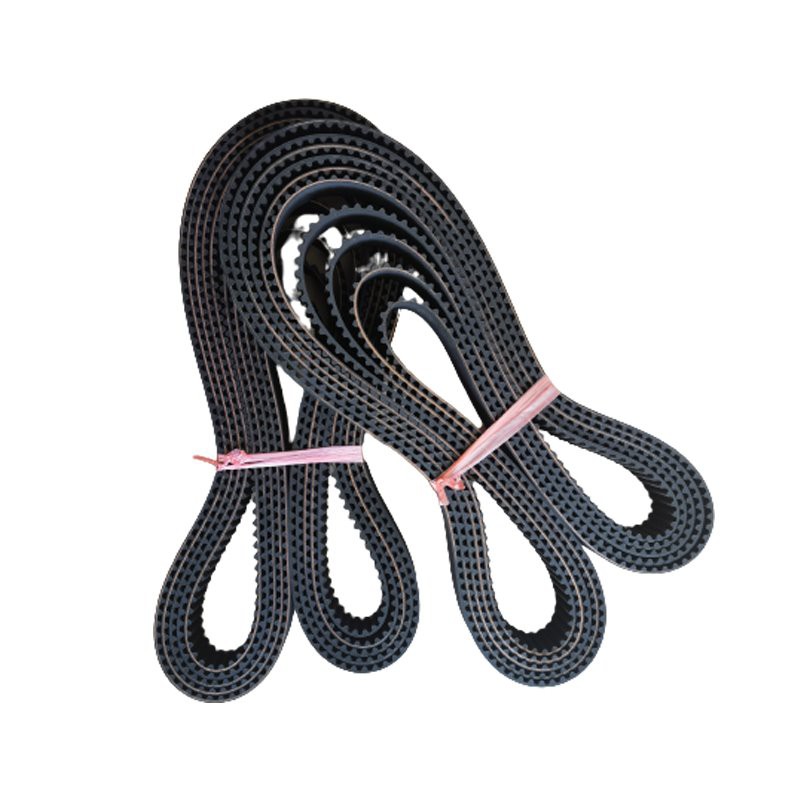


Use the Correct Installation Procedures
It's tempting to install a new ribbed V-belt by simply rolling it onto the drive. This may save a few minutes, but it's actually extremely risky if you don't loosen the motor first. In addition to being unsafe, belts and sheaves can get damaged and you'll be putting excessive loads on the belt and the support bearings and shafts.
Choose the Right Sized Belt
Ribbed V-belts have undergone significant technological development over the years in terms of new materials, construction methods, tensile cord advancements and cross-section profiles. They come in many different sizes, widths and profiles, and for optimum performance, you need to choose one that is appropriate to your application. A loose-fitting belt will negatively affect its efficiency and its life, so make sure the sheave grooves match and that it fits well.
Regularly Check Sheaves for Wear
Surprisingly, many users replace ribbed V-belts repeatedly without bothering to check the sheaves for signs of wear. Things to look out for include groove sidewall cupping and/or a polished groove sidewall with ridges. Worn, broken or damaged sheaves can reduce belt life by as much as 50% so they need to be replaced immediately. Don't overlook sheave wear by simply re-tensioning the belt, rather get yourself an inexpensive sheave-groove measuring tool or gauge – it will save money and prolong the life of your belt.
Align Sheaves Properly
Proper sheave alignment is an important step in making ribbed V-belts last. A laser tool is the fastest and most accurate means of ensuring horizontal and vertical alignment. There are many different models of professional laser tools available for belt alignment, all of which will result in reduced pulley, belt, bearing and seal wear, reduced vibration levels and increased efficiencies.
Tension Belt Properly
A belt tension tool is the best way to tension belts properly and makes your belt last longer. If you rely on 'feel', you may find it difficult to achieve the right tension and this will affect the life of your belt. If the tension is too little, it will result in high temperatures and excessive noise causing the belts to slip. If tension is too much, the band can break and bearing life will be dramatically reduced.
Ensure Appropriate Ventilation
One of the keys to long belt life is to keep the temperature as low as possible. To mitigate the high heat generated by the continuous flexing around sheaves etc, make sure the belt guarding area is properly ventilated.
Always Check Tension after Break-in
Belt tension can change once the belt has heated up and stretched a little, so it's really important to do a quick check and tighten if necessary to ensure the tensioning is correct. Many mechanics don't do this, but it is a really important step in substantially increasing the life of your ribbed V-belt. To maintain horizontal angular alignment, it's best to use a laser tool.
Our Factory
Our factory is a professional factory producing rubber belts.

Ultimate FAQ Guide to Ribbed V-Belt
We're well-known as one of the leading ribbed v-belt manufacturers and suppliers in China. If you're going to buy or wholesale cheap ribbed v-belt, welcome to get free sample from our factory. All our products are with high quality and competitive price.
