
Your Professional Timing Belt Manufacturer in China!
Our factory is a professional factory producing rubber belts, We are one of the leading manufacturers in the research, design, manufacturing, and distribution of various power transmission belts in China.
Why Choose Us
Wide Product Range
Our products cover Auto Transmission belts such as cogged V-belts, Ribbed V-belts, timing belts, Industrial transmission belts such as REL&REP belts, etc.
Broad Market
Our products are exported to dozens of countries/regions in Southeast Asia, the Middle East, Africa, and the United States.
Advanced Equipment
Our factory independently manufactures and improves equipment, adheres to technological innovation, and independently develops and introduces advanced equipment.
Professional Service
We have an experienced and professional customer support team to provide flexible service to customers around the world, giving full support from product design to marketing.
Please tell me the model of timing belts that you need; we can give you the quotation ASAP.
-

HNBR Timing Belts
HNBR timing belts are high-performance rubber belts commonly used in various automotive and Add to Inquiry -
OEM Timing Belts
Our OEM Timing Belts are high-quality and reliable components designed to ensure precise and Add to Inquiry -
RU Timing Belt
RU Timing Belt is a high-quality, durable and reliable product that plays a crucial role in the Add to Inquiry -
Auto Timing Belts
Today's more advanced automotive engines work at higher temperatures, faster speeds, and create Add to Inquiry -
S8M Timing Belt
The S8M Timing Belt offers exceptional strength, precise timing, low noise, and excellent wear Add to Inquiry -
Industrial PU Timing Belt
The Industrial PU Timing Belt is a high-quality and reliable device used in various industrial Add to Inquiry -
Open End Timing Belts
Open end timing belts with a variety of teeth shapes have proven to be a good choice for converting Add to Inquiry -
Polyurethane Open-ended Timing Belt
The Polyurethane Open-Ended Timing Belt is a high-performance and efficient power transmission belt Add to Inquiry -
3M 5M 8M Timing Belt
The 3M 5M 8M Timing Belt is a high-quality and reliable product designed for various industrial Add to Inquiry -
HTD8M Timing Belt
The HTD8M Timing Belt is a high-quality and reliable product designed for efficient power Add to Inquiry


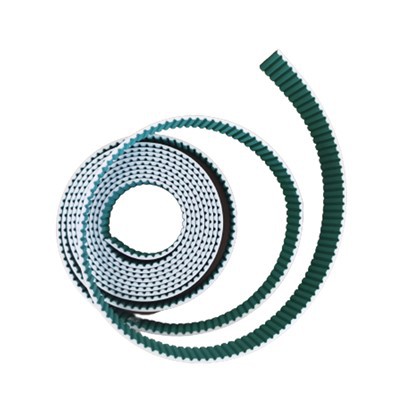
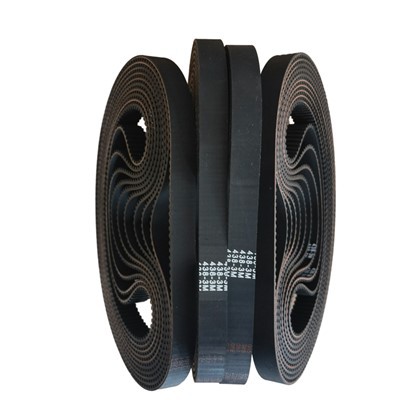

Definition of Timing Belt
The timing belt is the belt that controls the camshafts in your engine, opening and closing valves at just the right time for smooth operation. The timing belt has teeth that turn the camshaft in time with the crankshaft. Some cars and trucks use timing chains or gears, which are more durable. But timing belts, made of rubber compound, are quieter and more efficient. They also don't need lube to work.
How Do Timing Belts Work
The timing belt is a rubber belt with hard teeth that interlock with the cogwheels of the crankshaft and the camshafts. It synchronizes the movement of the crankshaft and camshafts. This ensures that the engine intake and exhaust valves open and close in time with the pistons. If the crankshaft and camshafts are not operating in unison, the vehicle will not run correctly. If the intake valves open too early, there may be too much fuel-air mixture flowing into the engine combustion chamber, leading to poor combustion and power loss. And if the exhaust valves open too early, the combustion chamber will lose pressure and cause a power loss. If the engine components are very out of sync, they might collide and damage each other, resulting in costly repairs.
Advantages of Timing Belts
There are several advantages of using a timing belt in an automotive engine. Here are some key benefits:
Synchronization of Engine Components
Timing belts ensure precise timing and synchronization between the crankshaft and the camshaft(s) in an internal combustion engine. This synchronization allows the engine valves to open and close at the correct time, ensuring optimal fuel combustion and power delivery.
Low Noise and Vibration
Timing belts are generally quieter compared to other engine timing systems, such as timing chains. They produce less noise and generate fewer vibrations within the engine, which leads to a smoother and more pleasurable driving experience.
Lightweight and Efficient
Timing belts are typically made from lightweight materials such as rubber and fiberglass. This lightweight construction reduces the weight of the engine components, allowing for improved fuel efficiency and reduced drag on the engine.
Cost-Effective
Timing belts are generally less expensive than timing chains, both in terms of initial purchase and maintenance. They are easier and faster to install, requiring less labor. Additionally, timing belts are designed to be replaced periodically, which prevents potential engine damage and costly repairs.
Reduced Friction
Timing belts run smoother and produce less friction compared to some other options, like gears. This reduced friction leads to less engine wear and tear, resulting in extended engine life and improved reliability.
Lower Maintenance Requirements
Unlike timing chains that need regular lubrication, timing belts are self-lubricating. This property makes them relatively low-maintenance since they do not require additional lubrication during their lifespan. Additionally, most modern timing belts have a long service life, often lasting 60,000 to 100,000 miles before replacement is needed.
Types of Timing Belts
Open Ended Timing Belts
Open ended timing belts are available in different types of materials including extruded, thermoplastic polyurethane. These types of belts are dimensionally stable and they are made ideal for use in linear drive systems by their precise positioning. They have a high spring rate and their tooth shear strength is excellent. For a linear drive with stiffness and repeatability that is high, steel tension members are recommended over aramid fiber. Open ended timing belts are available in 50m rolls or specified cut lengths.
Spliced and Welded Timing Belts
In many general purpose applications, spliced and welded are utilized. Their construction type is preferred in conveying as well as for profiles and backings that are welded. At the start of these types of belts, there is a length of roll stock that is open that contains finger splices cut into the belt and is then welded together using heat. Spliced and welded timing belts have the same sealed edges and smooth back as open ended timing belts. These types of belts have 50 percent of truly endless belt strength because they are welded. They can be purchased in one tooth increments for a minimum length.
Truly Endless Timing Belts
Truly endless polyurethane timing belts are extruded without a weld. This makes truly endless timing belts the strongest construction type, making them ideal for applications that involve power transmission. Truly endless timing belts have steel tension members as a standard and are found in different types of materials. The AT is the most famous tooth configuration for more tooth shear strength. Double sided timing belts are also available for drive systems whose shaft direction changes. These types of belts are available with unsealed edges. If they are closely inspected, a pin-hole location of the tension member is found, where it exited the belt during the process of extrusion.
Applications of Timing Belts
Timing belts are used in a wide range of industries and applications, including:

Automotive Engines
Timing belts synchronize the movement of camshafts and crankshafts in internal combustion engines.

Printers and Scanners
Timing belts ensure precise movement and positioning of print heads and scanning components.

Industrial Machinery
They provide accurate timing in assembly lines, conveyor systems, and robotic equipment.

Machine Tools
Timing belts ensure synchronized motion in milling machines, lathes, and other precision tools.
Stages in Designing a Timing Belt
The stages in designing timing belts are typically:
Stage 1: Peak Torque
The first stage is the determination of the peak torque for the drive. This is mostly the starting torque of the motor. However there may also be momentary or shock loads that are unusual occurring during normal operation.
Stage 2: Diameter Determination
The second stage is the determination of the diameters of the largest pulley that can be utilized. This is done in consideration of the space limitations and the system's drive ratio. This helps by increasing the drive's torque capacity and prolonging the service life of the belt.
Stage 3: Tooth Profile Selection
The third stage is the selection of the tooth profile of the belt. If for the selected profile, the torque for the peak drive is at the upper limits of torque transmission capability, consider making use of the next higher torque rated profile. For the selected profile, find the corresponding pitch. For the calculation of the required number of belt teeth, this value will be needed.
Stage 4: Calculating T.I.M
Calculate the T.I.M (teeth in mesh), bearing in mind the teeth in mesh factor. The peak torque from stage one must now be divided by the T.I.M. factor in order to determine the design torque. An important point to note is to check the belt pitch again to ensure that your application has not been moved outside the limits of the pitch that is desired for the chosen pulleys by this adjustment in torque.
Stage 5: Belt Pitch Length
This stage involves the calculation of the belt pitch length based on the distance of the design center of the drive.
Stage 6: Length Division and Belt Pitch
The sixth stage involves the division of the length of the belt pitch by the selected tooth pitch and rounding of the result to the nearest whole number. This will be the number of teeth on the belt for the application. The nominal center distance of the drive design must be adjusted to match the belt.
Stage 7: Calculating Effective Tension
This seventh stage calculates the effective tension (Te) on the drive by using the pitch radius and design torque of the loaded pulley that is the smallest in the system.
Stage 8: Strength Factor
In this stage, the selection of the strength factor for the application is done. The effective tension from stage seven is then divided by the strength factor to determine the break strength required for the belt design. To represent a double span break, multiply by 2. For the determination of the reinforcement type that is required and the belt width, consult the table for the break strength. The value that is listed in the table must be larger than the break strength for the design.
Stage 9: Belt Width Selection
This stage involves the selection of the belt width that is able to handle the torque of the design with the selected size of the pulley. An important point to note is that the required width of the belt for the system will be wider of the two.
Construction Material of Timing Belts
The various materials used in constructing timing belts include:
Rubber in Timing Belts
Rubber is the most famous timing belt construction material used across industries and applications. Many of the internal combustion engines found in a great diversity of cars use timing belts that are made out of some type of rubber or rubber compound. Even though rubber is the most commonly used material for timing belts, it does have some drawbacks. Timing belts made from rubber are notorious for stretching and breaking relatively quickly if they are subjected to high temperatures and quantities of motor oil found in the engine blocks of vehicles. Nowadays, there are multiple types of rubber materials that are temperature resistant due to the advancement of technology. These rubber materials are now used to prolong the lifespan of your timing belts, and improve their resistance to distortion. Greater strength and traction is also offered by improved rubber compounds and reinforcing fibers. These improved rubber compounds also guard against sheared teeth or any other potential damage to the belt.
Polyurethane Material
Polyurethane has become a famous option for timing belts due to its properties which are resistance to high temperatures, natural greater elasticity and resistance to harmful effects of oil. For a broad range of applications, timing belts made from polyurethane are long lasting and offer extremely energy efficient solutions. Polyurethane belts are capable of delivering high tensile strength and they also provide higher loading capacities. These higher loading capacities are crucial for the production of optimal torque. These types of belts are preferred by many in the industry because their cleaning and maintenance is relatively easy. Polyurethane is the best choice of material for making timing belts for multiple types of power transmissions and roller conveyor systems.
Fabric Belts
Timing belts made from fabric are the best choice when requiring high-performance and acceleration forces. In fabric timing belts, a wide array and combinations of materials are used. This results in splendid tensile strength, low coefficients of friction, and brilliant resistance to temperatures, both high and low. When the requirements to be met are high torque or acceleration, there is a great diversity of fabric timing belt options that will highly benefit.
Things to Consider When Choosing a Timing Belt
Material
Apparently, there are different kinds of materials used in timing belts because each has its own specifications to which it can handle certain circumstances.
● Neoprene Fiberglass Belts
Why use this? This is the typical material used in timing belts. It has a longer shelf time because of its UV resistant nature. Also, it has an outstanding chemical resistance as well as dimensional stability.
When should I use this? Since it has a great chemical resistance, neoprene fiberglass belts are ideal in corrosive environments.
● Urethane/Polyester & Urethane/Kevlar Belts
Why use this? Timing belts reinforced with these components are known for its ability in shock resistance. Its reinforcement with combined materials makes it stronger and boasts with its durability and flexibility.
When should I use this? Its capacity in resisting shocks makes it the good choice for application involving intermittent shock loading in high level.
● Urethane Belts
Why use this? Notable for its relatively low elongation rate while still possessing an impressive tensile strength, urethane or steel belts are also a sought for the material used in timing belts.
When should I use this? Due to its impressive dimensional stability, urethane belts can withstand harsh and extreme temperatures- be it too high or too low. However, this type of belt can't prevent electrical charges from accumulating making it not static conductive.
Dimensions and Speed
Aside from the materials used, there are also some characteristics which you should track in your timing belts. These characteristics influence how smooth your equipment will run.
● Belt Width. This characteristic deals with the plausible magnitude of tracking belt force. The wider the timing belts are, the greater the tracking force it has.
● Belt Length. Having shorter belts mean a greater tracking force because of the connection between belt molds and tensile cords.
● Pulley Diameter. To create greater tracking force, timing belts must work on small-sized pulleys. The pulley's diameter must be wider than that of the belt.
● When applied to vertical shafts, belts tend to sag because of gravity's pull. This can be controlled by having enough belt tension during installation.
● Belt Installation Tension. The timing belt's magnitude of belt installation tension matters due to the impact of different loads of torque gathered by belt tracking.
Environment Concerns
Timing belts might not seem like it but they are as fragile as glass. This synchronous device might be hampered from working if its operating environment affects its process. Common concerns include:
Will an object fall at my timing belt? This is detrimental for the equipment as it can stall how the synchronous device functions.
Although dust is small in nature, it builds up and tends to cause a larger problem to your timing belts. It can impact bearing, shafting, and framework.
It is the enemy of any electrical equipment. Even light contact with water can make timing belts swell leading to increased belt tension.
Sensitivity to static. The conductivity properties of the belt depend on how it handled static electrical charges. Material handling processed is affected if this isn't addressed.
Functionality
Depending on where you will use your equipment, its function matters when choosing a timing belt. You should check whether you will deal with material handling, robotics, or thermal sub-systems. Not every material can handle the requirements for all industries. Thus, the need to conform with application in selecting a timing belt.
Our Factory
Our factory is a professional factory producing rubber belts.

Ultimate FAQ Guide to Timing Belt
We're well-known as one of the leading timing belt manufacturers and suppliers in China. If you're going to buy or wholesale cheap timing belt, welcome to get free sample from our factory. All our products are with high quality and competitive price.
