
Your Professional Industrial Timing Belt Manufacturer in China!
Our factory is a professional factory producing rubber belts, We are one of the leading manufacturers in the research, design, manufacturing, and distribution of various power transmission belts in China.
Why Choose Us
Wide Product Range
Our products cover Auto Transmission belts such as cogged V-belts, Ribbed V-belts, timing belts, Industrial transmission belts such as REL&REP belts, etc.
Broad Market
Our products are exported to dozens of countries/regions in Southeast Asia, the Middle East, Africa, and the United States.
Advanced Equipment
Our factory independently manufactures and improves equipment, adheres to technological innovation, and independently develops and introduces advanced equipment.
Professional Service
We have an experienced and professional customer support team to provide flexible service to customers around the world, giving full support from product design to marketing.
-

Industrial PU Timing Belt
The Industrial PU Timing Belt is a high-quality and reliable device used in various industrial Add to Inquiry -
Open End Timing Belts
Open end timing belts with a variety of teeth shapes have proven to be a good choice for converting Add to Inquiry -
Polyurethane Open-ended Timing Belt
The Polyurethane Open-Ended Timing Belt is a high-performance and efficient power transmission belt Add to Inquiry -
3M 5M 8M Timing Belt
The 3M 5M 8M Timing Belt is a high-quality and reliable product designed for various industrial Add to Inquiry -
HTD8M Timing Belt
The HTD8M Timing Belt is a high-quality and reliable product designed for efficient power Add to Inquiry



Definition of Industrial Timing Belt
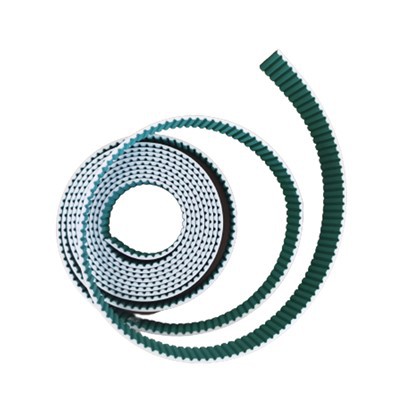
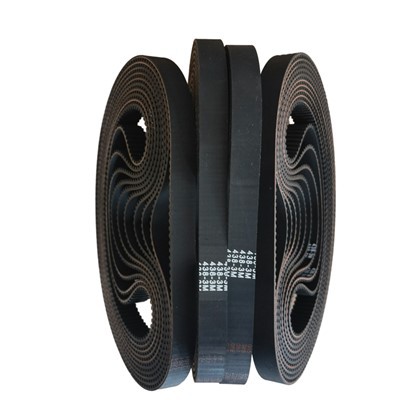
Industrial Timing Belts are one of the most important parts of Power Transmission drives. An Industrial Timing Belt can be best described as a belt with integrally molded teeth on its inside which makes positive engagement with an axially grooved pulley. The timing belt is also known as a synchronous belt or positive-drive belt. A timing belt drive is not considered as a substitute or replacement for other modes of belt drives. Timing belts exhibit important properties such as fixed speed ratio, no re-tensioning after installation, and low maintenance with a wide variety of power transmission capacities and drive speeds.
How Do Industrial Timing Belts Work
The industrial timing belt's job is cyclic. Its primary function is to rotate the camshaft pulley, synchronizing this pulley with the crankshaft pulley. Some models have two camshaft pulleys. The timing belt synchronizes the valves and pistons so that they push cams on the camshaft at the right times. This process is comparable to pedaling a bicycle. The cams must reach the top of the cycle before the valves and pistons push them down again.
The inner part of the belt contains teeth that correspond to the gears. The teeth create friction as the timing belt comes into contact with the crankshaft and camshaft sprockets. If the teeth are damaged, the timing belt can pull the crankshaft and camshaft out of synchronization. This throws the valve and piston timing, which can destroy the valves and pistons. The damage is often even worse if you have a timing chain.
Each timing belt also needs a tensioner to maintain pressure on the timing belt. The tensioner may be spring-loaded, oil-pressure-activated, or set manually. Tensioners ensure that the timing belt delivers enough tension to move all of the pulleys that drive engine components.
Advantages of Industrial Timing Belt
The various advantages of industrial timing belt include:
Precise Synchronisation
They ensure accurate synchronisation between the crankshaft and camshaft, maintaining proper valve timing.
Quiet Operation
They are generally quieter compared to timing chains, resulting in reduced engine noise.
Reduced Maintenance
Industrial timing belts require less maintenance since they don't need lubrication, and their enclosed design prevents debris buildup.
Cost-Effective
They are often more cost-effective to manufacture and replace than timing chains.
Lightweight
Industrial timing belts are lighter than timing chains, improving fuel efficiency and reducing rotating mass.
Efficient Power Transmission
They offer efficient power transmission due to their lightweight and flexible design.
Less Friction
Industrial timing belts generate less friction than timing chains, which can lead to increased engine efficiency.
Reduced Engine Vibration
The smoother operation of timing belts can contribute to reduced engine vibration.
Space Savings
They are compact, allowing for more flexible engine design and placement.
Types of Industrial Timing Belt
A timing belt is a crucial component in many internal combustion engines and machinery. It's made of rubber or synthetic materials with teeth on its inner surface, designed to mesh with gears or pulleys. Timing belts are categorized into two main types: synchronous and non-synchronous (V-belts). Synchronous timing belts have precisely spaced teeth that engage with matching pulley grooves, ensuring precise synchronization of engine components. Non-synchronous belts, like V-belts, rely on friction and tension to transmit power, often found in applications like industrial machinery. Proper maintenance and replacement of timing belts are essential for the efficient and reliable operation of the equipment they serve. The different types of industrial timing belts are:
Industrial Open-Ended Timing Belts
Open-ended timing belts are crafted from diverse materials like extruded thermoplastic polyurethane. Renowned for dimensional stability, they excel in linear drive systems due to precise positioning. Possessing a high spring rate and excellent tooth shear strength, steel tension members are recommended for enhanced stiffness and repeatability. These belts are available in 50m rolls or specified cut lengths.
Spliced and Welded Timing Belts
Spliced and welded timing belts find favour in general-purpose applications, ideal for conveying and welded profiles and backings. These belts start with a length of open roll stock featuring finger splices that are heat-welded together. They share sealed edges and a smooth back akin to open-ended timing belts. As a result of welding, they possess 50% of truly endless belt strength and can be purchased in one-tooth increments for specific lengths.
Truly Endless Timing Belts
Truly endless polyurethane timing belts are extruded without welding, rendering them the most robust construction type for power transmission applications. Featuring steel tension members as standard, they are available in diverse materials. The tooth configuration in this timing belt is renowned for enhanced tooth shear strength. Additionally, double-sided timing belts are offered for systems with changing shaft directions. Some of these belts feature unsealed edges and a visible pin-hole location from the tension member's extrusion process.
Applications of Industrial Timing Belt
Automotive Engines
Industrial timing belts are commonly used in internal combustion engines to synchronize the rotation of the crankshaft and camshaft, ensuring precise timing of the opening and closing of engine valves.


Power Transmission
Industrial timing belts are used for power transmission in various industrial applications, such as in conveyor systems and production lines, where they transmit rotational motion from one component to another efficiently and accurately.
Industrial Machinery
Industrial timing belts are used in conveyors, packaging equipment, and printing presses to ensure synchronized movement of various machine components.


Robotics
They play a crucial role in the precise movement of robot arms, allowing for accurate positioning and control in various industries, including manufacturing and healthcare.
Agricultural Equipment
They are utilized in agricultural machinery like combine harvesters and seeders to synchronize the operation of different components, such as the cutting blades and seed dispensers.


Textile Machinery
Textile machines, like looms and knitting machines, use timing belts to control the movement of threads, shuttles, and needles, ensuring the production of consistent and high-quality fabrics.
Industrial Timing Belt Materials
Numerous materials have been used in the design and manufacture of timing belts over the years, and research is continually ongoing into developing new, more robust, more power-efficient and less noisy alternatives.
Industrial Timing Belts - Rubber
Rubber timing belts are the traditional standard, widely used in a great many environments and applications. Most internal combustion engine cambelts, such as those used on the majority of cars (and certainly any made more than a decade ago) will have used a timing belt made from rubber.
It's still a very common solution today, although more modern variants tend to include numerous types of temperature-resistant rubber compounds for better longevity and resistance to distortion. Other features you might come across in higher performance rubber timing belts could include high-strength compounds to guard against teeth shearing off, and reinforcing fibres for improved tensile strength and traction.
Industrial Timing Belts - Polyurethane
Polyurethane timing belts offer a long-lasting and highly energy-efficient solution for a wide range of different applications across a variety of sectors and industries as a means of transferring power. They have greater elasticity than rubber and are rated to different temperature settings and petrol resistance.
Timing belts made from polyurethane also tend to have high load capacities, along with high tensile strength. They're resistant to oil, chemicals and abrasion, and are easy to clean and maintain, making them a popular choice for many types of power transmissions and roller conveyor systems, such as line-shaft conveyors.
Industrial Timing Belts - Fabric
Fabric timing belts tend to be favoured for high-performance settings and applications, where drives with very high acceleration forces need to be applied, as well as for the transmission of high torque at low speeds.
Timing belts made from fabric usually incorporate various materials that, used in certain combinations, can offer extraordinary tensile strength and high tear resistance for application in more extreme environments. Fabric compounds with especially low coefficients of friction and very high/low temperature resistance are increasingly common on today's market.
Things to Consider When Choosing Industrial Timing Belt
Assessing Your Needs
Before selecting an industrial timing belt, it is essential to assess your specific needs and requirements. This involves identifying the application's characteristics, analyzing the operating conditions, and determining the power transmission requirements.
Consider the specific requirements of your application. What type of machinery or equipment will the timing belt be used in? What are the load and speed requirements? Understanding these factors will help determine the appropriate belt type, tooth profile, and pitch.
Analyze the operating conditions and environment in which the timing belt will be used. Factors such as temperature, humidity, exposure to chemicals or oils, and the presence of dust or debris can affect the belt's performance and longevity.
Determine the power transmission requirements of your application. This includes calculating the required torque and speed, as well as considering any additional factors such as shock loads or backlashes.
Selecting the Right Industrial Timing Belt
Once you have assessed your needs, it is time to select the right industrial timing belt. Several factors should be considered during this process, including the material and construction of the timing belt, tooth profile and pitch options, and belt width and length.
The material and construction of the timing belt play a crucial role in its performance and durability. Different materials, such as neoprene, polyurethane, or rubber, offer varying levels of strength, flexibility, and resistance to wear and tear.
The tooth profile and pitch options of the timing belt determine its engagement with the pulleys or sprockets. Different profiles, such as trapezoidal or curvilinear, are suitable for specific applications. The pitch refers to the distance between the teeth and is essential for maintaining accurate timing.
Belt width and length are also critical considerations when selecting an industrial timing belt. The width should be chosen based on the space available and the load requirements. The length should be carefully measured to ensure proper fit and tension.
Causes of Failure of Industrial Timing Belt

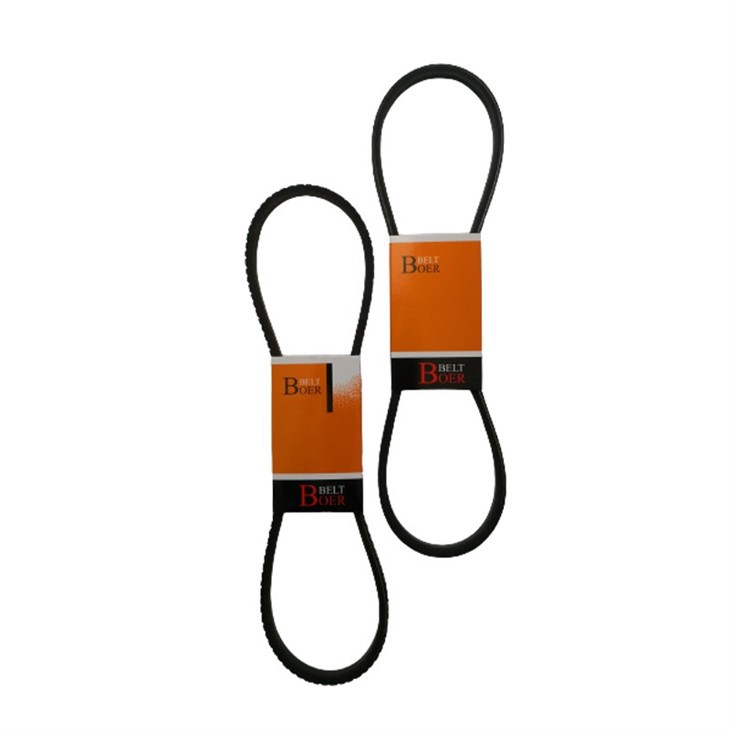

The failure of industrial timing belts can arise from several factors, including:
Misalignment Failure
Misalignment stands as a significant culprit behind timing belt drive failure, stemming from uneven or excessive tooth wear, tensile failure, and belt tracking issues. To enhance industrial timing belt longevity, it's crucial to regularly assess and align shafts and timing pulleys, thereby minimizing downtime.
Excessive Load
Excessive load can lead to the shearing of teeth in an industrial timing belt. Furthermore, shock loads and undue stress can cause uneven tooth wear and tensile failure. Addressing this challenge necessitates a redesign of the drive system to handle the load appropriately.
Under-Tensioned Belt
Ratcheting, characterised by teeth skipping, is a consequence of under-tensioned timing belts. This under-tensioning leads to uneven or excessive tooth wear and amplified drive noise. To circumvent this issue, precise tensioning using a tension gauge is paramount.
Weak Drive Structure
Excessive vibrations within a drive system or the presence of belt stretch might point to a weak drive structure. Remedying this concern involves reinforcing the structural integrity of the drive components to curtail vibrations and prevent belt issues.
Damaged or Worn Pulleys
The longevity of industrial timing belts can be compromised by damaged or worn pulleys. Worn teeth on pulleys lead to accelerated belt wear and potential damage. Nicks or gouges on pulleys can even cause cuts to the belt. Regular inspection and prompt replacement of worn pulleys are essential preventive measures to ensure proper timing belt operation.
Maintenance and Care
Proper installation, inspection, and maintenance are essential for maximizing the performance and longevity of industrial timing belts.
During installation, it is crucial to follow the manufacturer's instructions and use appropriate tools and equipment. Improper installation can lead to premature belt failure and costly downtime.
Regular inspection and maintenance are necessary to identify any signs of wear, damage, or misalignment. Inspect the timing belt for cracks, fraying, or excessive wear on the teeth. Check the tension and alignment to ensure optimal performance.
In case of any issues or malfunctions, troubleshooting is necessary. Common problems with industrial timing belts include slipping, excessive noise, or improper synchronization.
Choosing the perfect industrial timing belt is crucial for the smooth operation and optimal performance of machinery and equipment in various industries. By understanding the specific requirements of your application, assessing the operating conditions, and selecting the right timing belt, you can ensure efficient power transmission and precise timing.
Our Factory
Our factory is a professional factory producing rubber belts.

Ultimate FAQ Guide to Industrial Timing Belt
We're well-known as one of the leading industrial timing belt manufacturers and suppliers in China. If you're going to buy or wholesale cheap industrial timing belt, welcome to get free sample from our factory. All our products are with high quality and competitive price.
