
Your Professional Conveyor Belt Manufacturer in China!
Our factory is a professional factory producing rubber belts, We are one of the leading manufacturers in the research, design, manufacturing, and distribution of various power transmission belts in China.
Why Choose Us
Wide Product Range
Our products cover Auto Transmission belts such as cogged V-belts, Ribbed V-belts, timing belts, Industrial transmission belts such as REL&REP belts, etc.
Broad Market
Our products are exported to dozens of countries/regions in Southeast Asia, the Middle East, Africa, and the United States.
Advanced Equipment
Our factory independently manufactures and improves equipment, adheres to technological innovation, and independently develops and introduces advanced equipment.
Professional Service
We have an experienced and professional customer support team to provide flexible service to customers around the world, giving full support from product design to marketing.
Please tell me the model of Conveyor belts that you need; we can give you the quotation ASAP.
-

NN500 Conveyor Belt
The combination of Nylon in the warp and weft of a NN500 Conveyor Belt is frequently utilized in Add to Inquiry -
EP630 Conveyor Belt
EP630 conveyor belt is also known as high strength conveyor belt because to the great strength of Add to Inquiry -
Checkered Conveyor Belt
The Checkered Conveyor Belt is a versatile and reliable product designed to meet the diverse needs Add to Inquiry -
Heat Resistant Conveyor Belts
Our Heat Resistant Conveyor Belts are designed to withstand high temperature environments, making Add to Inquiry -
Conveyor Belt EP
EP conveyor belt is widely used in the mining and processing sectors for carrying bulk or lumpy Add to Inquiry -
Smooth Conveyor Belt
Introducing our innovative Smooth Conveyor Belt, designed to revolutionize the transportation of Add to Inquiry


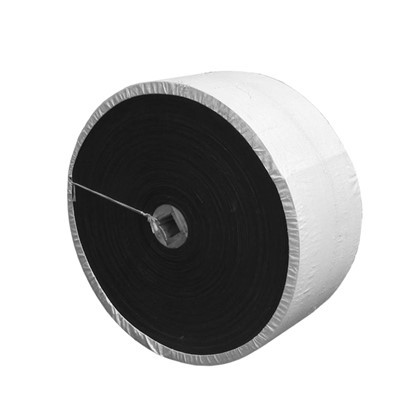
Definition of Conveyor Belt
A conveyor belt is the carrying medium of a belt conveyor system (often shortened to a belt conveyor). A belt conveyor system is one of many types of conveyor systems. A belt conveyor system consists of two or more pulleys (sometimes referred to as drums), with a closed loop of carrying medium—the conveyor belt—that rotates about them. It is powered by an electric motor and supported by a metal plate bed or rollers upon which the conveyor belt rests. The pulley that powers a conveyor belt is referred to as the drive pulley and has an unpowered idler pulley.
How Do Conveyor Belts Work
Conveyor belts resemble a band or loop of rollers connected to rotors powered by a motor. The belts can be as narrow as one inch (25 mm) or as wide as five feet (1.5 m), with plastic modular belts as wide as ten feet (3 m). Conveyor belts are made of highly durable and sturdy materials, much like heavy-duty machinery. The design of the belt provides structure and traction for the movement of goods and materials.
Conveyor Belt Motors
The motor on a conveyor belt turns the pulleys that move the conveyor belt. A sufficient amount of friction between the belt and the pulleys will adhere the belt to the pulleys. The force of the conveyor motor rotates a drive pulley that moves the conveyor belt.
Conveyor Belt Pulleys
Pulleys are positioned at either end of the conveyor belt and near the drive motor. The drive pulley drives the conveyor belt and has external bearings driven by a motor and reducer. Pulleys are crowned with lagging to reduce belt slippage. Return, idler, or tail pulleys redirect the conveyor belt back to the drive pulley, have internal bearings, and are located at the end of the conveyor bed or at both ends of the conveyor with a center drive. The purpose of tail pulleys is to provide tension in the conveyor belt.
Conveyor Belt Rollers
A conveyor belt is supported by a dead plate in the conveyor's frame. Rollers are used outside and underneath the conveyor to support the belt as it returns to the infeed. The center of the shaft of the rollers has a spring-retained axle used to install and remove it.
Conveyor Belt
There are endless types, sizes, shapes, angles, and materials for conveyor belts. In a conveying system, the design and type of conveyor belt determine how it functions, and it is fabricated to carry materials and products from one location to another.
Advantages of Conveyor Belts
Belt Conveyors can Handle a Wide Variety of Materials
These materials range from very fine, e.g., cement to course, e.g., coal from mining sites. The belt conveyor is suitable as it does not cause any degradation of the products being moved.
The Belt Changes in Elevation
It can be configured in different ways such that it can fit almost any application. It can move materials across levels, horizontally, or in an inclined position. Some can also transport the load in a horizontal position to a certain point; then it is elevated the rest of the way.
Reclaim Bulk Materials
Radial stackers are usually available in a processing plant to create large loads of materials. Some conveyor systems have reclaiming belts under the loads to carry the materials to the processing plant.
Covers a Long Distance
Conveyor belts are very convenient as they cover a long path; thus, there is no need to worry about goods transportation, especially those that are bulky.
Low Power Consumption
Less power is required to operate the belt system, unlike other types of conveyors. When carrying bulk materials or loads to the top, they remain static. Due to this, less energy needed to move.
Fully Automated
The materials are usually loaded automatically, and therefore less manual support and monitoring are required. It also ensures that no breakage or loss of materials is experienced when handling. A lot of work is done in a short period; hence saving time and productivity and responsiveness are increased.
Availability of Free Space
Conveyor belts help to manufacture plants to have free space. Less congestion is witnessed as goods move quite fast from one point to another and also the number of manual workers is limited. The plants are, therefore, able to put up new lines or even implement new processes within the industries.
Modularity and Versatility
Conveyor belts are flexible when it comes to changing, reducing, or increasing equipment as the manufacturing plant changes. Some companies are, at times, forced to change their goods according to the market, and therefore, adaptability to different products is vital.
Types of Conveyor Belts


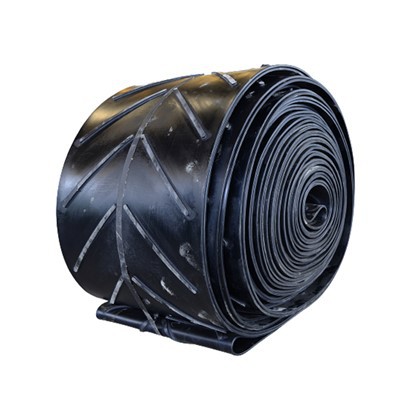
Roller Bed Conveyor Belt
The surface of a roller bed conveyor belt consists of a set of rollers chosen to meet the needs of production requirements, such as speed, weight, and the type of products being moved. The length of a roller bed conveyor belt determines the number of rollers required. Roller bed conveyors are ideal for conditions needing increased weight capacity. The roller bed design minimizes the amount of friction transferred to the belt, allowing for smooth product movement.
Flat Belt Conveyor Belt
A flat belt conveyor belt uses a series of pulleys to move materials and supplies. Its belt is made of natural or synthetic materials; this makes it versatile and adaptable to varying conditions and applications. In some instances, a flat belt conveyor belt has a center drive and nose bars.
Modular Conveyor Belt
A modular belt conveyor consists of interlocked pieces made of hard plastic with segments that can be easily removed and replaced. The design of modular belt conveyors makes them easier to clean, and the material is resistant to sharp and abrasive substances. Modular belt conveyors come in varying configurations and use a single belt to go around corners, in a straight line, and up and down declines.
Cleated Conveyor Belt
Cleated belt conveyors have sections, pockets, or dividers that secure products when the belt declines or inclines. The cleats can be equally or unequally spaced and come in different styles and shapes, depending on the product and the design of the belt.
Inverted Capital T – An inverted T cleat stands perpendicular to the belt and provides support for delicate and fragile materials.
Forward Leaning Capital L – A leaning capital L has a wide base that can be curved to scoop up granular materials. The design of the capital L makes it less resistant to leverage forces.
Inverted V – Inverted V cleats are two inches or less to create a trough-like effect and are used for heavy, abrasive, and large bulk materials.
Curved Conveyor Belt
The curves in conveyor belts are used to carry products around corners, make transfers, and make efficient use of floor space. Curved conveyor belts can make "U" turns to face the direction from which they came. They are made with flat belts and can turn at 45°, 90°, 135°, and 180° angles.
Incline Conveyor Belt
There are several varieties of incline conveyor belts, with some having a rough, uneven surface while others have cleats to hold materials and prevent them from slipping or falling back. The underside of the belt has an even surface to allow the belt to glide smoothly along the bed. Modular conveyor belts can be used for this purpose. Cleats may be included for increased slippage prevention, depending on the moving material.
Decline Conveyor Belt
The purpose of a decline conveyor belt is to move products or materials down or change its height. As with the incline version of conveyor belts, a decline conveyor belt has a rough surface or cleats to prevent materials from slipping or falling. Decline conveyor belts are a continuous operating conveyor system with an articulated frame with a section that is pivoted or placed downward to accommodate the downward movement of products from an upper location.
Filter Conveyor Belt
Filter conveyor belts drain excess liquid from components or filter out toxins and contaminants. They are constructed with lateral grooves and holes in the center of the belt. Drainage holes are in a fabric-free zone down the center of the belt or sealed to prevent the liquid from soaking into the belt fabric. Much like a sidewall conveyor belt, filter conveyor belts can have sidewalls to prevent liquids and fluids from spilling over the sides of the belt. They are made of heated polyester, polypropylene, polyolefin, or stainless steel mesh for dewatering applications.
Timing Conveyor Belt
Timing conveyor belts are used for precision indexing and product placement. They are ideal for the positive placement of products regardless of the size of the product. Timing belt conveyors have a timing pulley and idler pulley with the timing belt looped around them. The teeth of the timing belt match the teeth of the pulleys with a support structure, conveyor frame, and support belt to hold the pulleys in place. Precision conveying and accurate placement of products differentiate timing belt conveyors from conveyor belts in general. Timing belt conveyors can have different spacing between their teeth, which can be rounded or trapezoidal.
Sandwich Conveyor Belt
A sandwich conveyor belt has two face-to-face belts, with one belt on top of the other to firmly hold materials. They have a rotating wheel for adjusting the pressure and gap between the belts. The materials to be moved are sandwiched between the two conveyor belts and hugged by the belts. The upper belt is not motorized and is moved by the force of the lower belt.
Anti-Static Conveyor Belt
Electrostatic charge on a conveyor belt can be created by friction between the belt and the bed, the movement of the conveyed product, or ionization in the air. In most cases, the static current is of low intensity but can cause problems if materials stick to the belt. Though the charge is very low, it may cause sparks, leading to hazardous conditions. Various devices can be installed on conveyor belt systems to dissipate and eliminate static charges. For example, anti-static belts might use carbon particles to make the belt anti-static or static-dissipative fabrics.
Applications of Conveyor Belts
The uses for conveyor belts range from small conveyors used to move jewelry and precious stones to outdoor conveyors configured to move rocks, coal, and ore. The various uses of conveyor belts can be broken into general and bulk material handling, food processing, and manufacturing and assembly operations.
01/
Bulk Material Handling
Bulk conveyor belts are used to move a wide variety of products and raw materials, including sugar, oats, cereal, fruit, flour, screws, nut fasteners, and food nuts. They quickly and efficiently load and unload cement, sand, and gravel. In mining, coal, minerals, rocks, and stones are moved from open and closed pit mining operations. The varying lengths of conveyor belts make it possible to remove minerals and refuse.
02/
Ship Loading and Unloading
Mobility is a crucial factor regarding the loading and unloading of ships. In the loading process, a belt conveying system unloads trucks and moves materials into the hold of a ship. For unloading, the process is reversed, and materials are moved from the ship and conveyed to trucks. Due to the unique nature of shipping and the different types of ships, loading and unloading belt conveyors are able to adjust to the height of the ship by telescoping.
03/
Luggage Transport
Belt conveyors are a necessary part of all airport operations in order to provide fast and efficient movement of packages, cargo, and luggage. For a belt conveying system to be successfully integrated into airport material handling, it must be able to meet the needs of all other handling and checking systems.
The specifications for airport belt conveyor systems include reliability, silent operation, appealing appearance, safety, and ease of maintenance. Every airport belt conveyor system is tailored to meet the specific requirements of the airport's layout, including angles, flow rate, and one- or two-way operation.
04/
Line Automated Assembly
Assembly operations have a series of conveyors that are custom-designed to fit the needs of the operation. As more and more assembly operations are using robotics and automated processes, belt conveying systems are being rapidly developed to meet the many computerized innovations and operational demands.
The varieties of belt conveyors used for automated assembly lines include chain, slider, hinged, plastic belt, and pallet. The increasing demand for rapid and efficient material movement has necessitated the creation of new and unique belt conveyor configurations.
05/
Parts Belt Conveyors
Parts belt conveyors can move and transport any type of part regardless of size or design, including hot, oily, and pressed parts from forging machines that need to be loaded in hoppers, storage units, and drums. Piano hinges are used due to their durability, strength, and rigidity. In addition, the weight and density of the part loads necessitate that the belt is made of shock- and impact-resistant materials, with sidewalls to prevent part spillage.
06/
Excavation Belt Conveyors
Excavation belt conveyors are designed to move earth and materials through small enclosed spaces such as windows, doors, and vents. Belt buckets are designed to handle loads of varying weights and have a high load capacity. Though excavation belt conveyors are capable of handling heavy loads, they can be easily maneuvered and positioned by two or three workers.
Materials for Making Conveyor Belts
Regardless of the material used to produce a conveyor belt, all types are designed to move products, materials, supplies, and components efficiently and smoothly from one point to another. The type of product determines the type of conveyor belt and is the guiding aspect of conveyor belt selection. Though there is a long list of materials used to make conveyor belts, all varieties fall into five categories: metal, plastic, rubber, fabric, and leather. There are subgroups and variations within each category.
Plastic Modular Conveyor Belts
Plastic conveyor belts are lightweight and temperature-resistant belts made of thermoplastics such as polyurethane, polyester, polyvinyl chloride, silicone, and polyethylene. To allow for bending, curving, and incline or decline motion, plastic conveyor belts have interlocking segments that give them the flexibility to move in any direction. Interlocked plastic conveyor belts are an alternative to metal and fabric belts.
Metal Conveyor Belts
Woven metal or plate conveyor belts are extremely strong, durable, rigid, and flat. Solid metal conveyor belts maintain their shape during their lifetime, while woven and linked conveyor belts will stretch and deform over time. Metal conveyor belts run in straight lines without curves, turns, or variations in their path. They are made from stainless steel, aluminum, or carbon steel and have exceptional longevity.
Rubber Conveyor Belts
Rubber has been a conveyor belt material for many years and is one of the more durable choices due to its abrasion resistance. The types of rubber used for conveyor belts include neoprene, nitrile, and styrene butadiene, all of which are reinforced with cloth fabric. The durability of rubber makes it ideal for harsh conditions where abrasion resistance and impact absorption are necessary. The cloth reinforcement prevents the rubber from stretching and deforming.
Fabric Conveyor Belts
Fabric conveyor belts are a cost-effective choice for short conveying systems with lower capacity. The belt is made of several layers of synthetic fabrics that are specially treated to prevent elongation and have lengthwise polyester threads with crosswise polyamide threads. The combination of the two thread patterns provides an exceptional tensile strength-to-weight ratio, flexibility, and resistance to impact and chemicals. The top covers for conveyor belts are made of polyurethane (PU), polyvinyl chloride (PVC), and silicone. In addition, rubber cover grades are added to fabric conveyor belts to make the belts resistant to fire, heat, and wear.
The types of fabric conveyor belts are:
● Nylon – Durable, heat resistant, impact resistant, and will not mildew
● Polyester – Has all the features of nylon but is less expensive and operates more quietly
● Kevlar – Flame retardant, impact resistant, made of thick fibers, and runs faster and longer than other fabrics
● Natural – Made of woven cotton and wool
Leather Conveyor Belts
Leather conveyor belts were the earliest form of conveyor belts and are still used today. They are known for their durability, shock resistance, and good gripping. For modern conveyor belts, leather is used for custom and hybrid conveying systems. As with all conveyor belts, leather belts come in various widths and thicknesses. They can be reinforced with various forms of material and coated to enhance their performance. Leather conveyor belts can perform all of the traditional tasks of a conveyor belt, including incline and decline product movement.
Maintenance Tips for Conveyor Belts
Check for Buildups
As part of the regular checkups you perform on your conveyor belt, you should complete a routine cleanliness check. Carefully look over your entire system from top to bottom, side to side and every way you can think of. Look for buildups of dirt, debris or residue of any kind. Wherever you find these types of buildup, remove them as thoroughly as possible. Debris is a common cause of mistracking. It can cause the belt to become aligned incorrectly, and it can also be responsible for blockages in your system.
Clean Your System Regularly
This process goes hand in hand with checking for buildups. However, if you clean regularly, you reduce the possibility of allowing buildups to happen in the first place. Make a regular habit of cleaning your conveyor system. You'll be more likely to catch issues early on and prevent any problems that would arise as a result of dirt or excess material buildup.
Make Sure the Frame is Square and Level
It's hard for your conveyor to run properly if the entire system is tilted at an unusual angle or thrown out of alignment, which can happen just from the regular motion of the machine as well any number of other factors. It may have even occurred when the system was being readjusted for transporting a different product or material.
It's essential to check regularly to make sure the conveyor frame is squared up neatly and everything is lined up correctly. You can easily confirm by using a standard level and checking to make sure that both sides are even.
Make Sure the End Pulleys Are Even
Pulleys are easy to check at the same time that you're already investigating whether the frame is square. Verify that each pulley in the system is evenly lined up with the conveyor frame. If these pulleys are off, this could lead to bigger problems with the belt slipping and parts wearing down more quickly.
Check That the Belt Is Cut Straight
This feature isn't necessarily something you need to check every time you perform maintenance since looking at it once will get the job done. However, it's still crucial to perform this analysis. While ideally, every belt is cut and formed perfectly, it's not impossible that you may have gotten a defective belt that simply isn't cut straight. If you didn't know about this defect, it could be wreaking all kinds of havoc in your conveyor system through mistracking. To check whether or not your belt is straight, try this. Remove the belt from the conveyor frame and lay it out flat on the floor. If the belt arcs or curves in any way, it isn't straight, and it will need to be replaced.
Keep the Idlers Running Smoothly
The conveyor belt's return idlers can become dirty, frozen or incorrectly aligned over time due to improper installation or natural wear, tear and motion. These parts should be cleaned regularly, and their alignment should be checked. If your idlers freeze or stop working in any way, it could have various ramifications for your system. It could lead to your belt wearing out faster than usual and needing to be replaced, among other possibilities. To avoid this situation, simply check the idlers regularly for any problems, cleaning them as they become dirty and replacing them as they begin to wear out.
Our Factory
Our factory is a professional factory producing rubber belts.

Ultimate FAQ Guide to Conveyor Belts
We're well-known as one of the leading conveyor belt manufacturers and suppliers in China. If you're going to buy or wholesale cheap conveyor belt, welcome to get free sample from our factory. All our products are with high quality and competitive price.
