


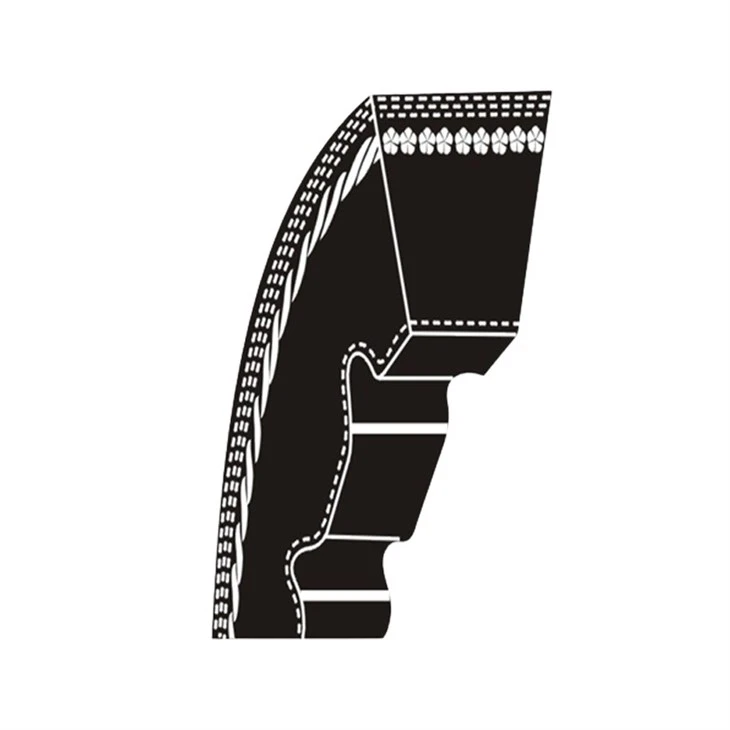

Automotive Fan Belt
Product Description
Automotive fan belts, also known as serpentine belts or accessory belts, are crucial components in the automotive industry designed to drive various engine accessories, including the fan, water pump, alternator, and power steering pump. These belts are made from high-quality rubber or synthetic compounds, ensuring durability and reliability in demanding automotive applications.
The main function of automotive fan belts is to transmit power from the engine's crankshaft to the different engine accessories, allowing them to operate efficiently. These belts feature a ribbed design that provides increased surface area and grip, minimizing slippage and maximizing power transfer efficiency.
Key Features
Ribbed Design: The ribbed design of these belts allows for increased contact area with the pulleys, providing excellent grip and reducing the chances of slippage. This ensures efficient power transmission and optimal performance of the engine accessories.
Wide Compatibility: Our automotive fan belts are available in various lengths and configurations, making them compatible with different vehicle models and engine types. They are designed to meet or exceed OEM specifications, ensuring proper fit and function.
Easy Installation and Maintenance: These belts are designed for easy installation, allowing for quick and hassle-free replacement when necessary. Periodic inspection and proper tensioning are recommended to ensure optimal belt performance.
Reliable Performance: By utilizing high-quality materials and adhering to stringent manufacturing standards, our automotive fan belts offer reliable and consistent performance, contributing to the smooth operation of vehicle systems.
Applications
Cooling System: Automotive fan belts power the engine cooling fan, ensuring proper airflow to the radiator and preventing engine overheating.
Electrical System: These belts drive the alternator, which generates electricity to charge the battery and power the vehicle's electrical components.
Power Steering System: Automotive fan belts provide power to the power steering pump, enabling easy and smooth steering control.
Water Pump: These belts drive the water pump, ensuring proper circulation of coolant for engine cooling.
In summary, our automotive fan belts are essential components for driving engine accessories in vehicles. Featuring high-quality materials, ribbed design, wide compatibility, and easy installation, they offer reliable power transmission and optimal performance. Trust our automotive fan belts to enhance the functionality and efficiency of your vehicle's engine system.
Structure
WRAPPED V BELTS
|
NO. |
Name |
Function |
Materrial |
|
1 |
Outside Fabric |
Protect the lining tensile member |
Polyester Cotton Canvas |
|
2 |
Tensile Member |
Core material to pass the dynamic forece |
Polyester Wire |
|
3 |
Top Rubber |
Maintain the Top shape of the adhesive tape |
NR,CR,SBR |
|
4 |
Buffer Rubber |
Support and protect the adhesive force of the tensile member |
NR,CR,SBR |
|
5 |
Bottom Rubber |
Maintain the bottom shape of the adhesive tape |
NR,CR,SBR |
RAW EDGE BELTS
|
NO. |
Name |
Function |
Material |
|
1 |
Top Fabric |
Protect the lining tensile member |
Polyester Cotton Canvas |
|
2 |
Core Cord |
Nuclear material of pass thedynamic force |
Polyester Cord |
|
3 |
Buffer Rubber |
Side compression resistant and sectionshape maintained |
CR,EPDM |
|
4 |
Teeth type |
Ventilation cooling |
Square and circle |

Classification
|
Wrapped V belt |
Model |
Top width(mm) |
Thickness(mm) |
Length change |
|
Classical wrapped (Li in inches) |
Z,O,M |
10 |
6 |
Li=Ld-22 |
|
A |
13 |
8 |
Li=Ld-30 |
|
|
AB |
15 |
9 |
Li=Ld-35 |
|
|
B |
17 |
11 |
Li=Ld-43 |
|
|
BC |
20 |
12.5 |
Li=Ld-48 |
|
|
C |
22 |
14 |
Li=Ld-52 |
|
|
CD |
25 |
16 |
Li=Ld-61 |
|
|
D |
32 |
19 |
Li=Ld-75 |
|
|
E |
38 |
23 |
Li=Ld-82 |
|
|
Wedge wrapped (Lp in mm) |
SPZ |
9.7 |
8 |
Lp=Li+38 |
|
SPA |
12.7 |
10 |
Lp=Li+45 |
|
|
SPB |
16.3 |
13 |
Lp=Li+60 |
|
|
SPC |
22 |
18 |
Lp=Li+83 |
|
|
Narrow (La in 1/10 inches) |
3V |
9.7 |
8 |
La=Li+42 |
|
5V |
15.7 |
13.5 |
La=Li+71 |
|
|
8V |
25 |
23 |
La=Li+120 |
|
|
Double-side (Li/Le in inches) |
AA |
13 |
10 |
La=Li+63 |
|
BB |
17 |
13 |
La=Li+82 |
|
|
CC |
22 |
17 |
La=Li+107 |
Banded Wrapped V-Belt
|
Model |
Pitch Width(mm) |
Top width(mm) |
Thickness(mm) |
Length change |
|
HA |
11 |
13 |
9.9 |
Le=Li+32 |
|
HB |
14 |
17 |
13 |
Le=Li+51 |
|
HC |
19 |
22 |
16.2 |
Le=Li+68 |
|
HD |
27 |
32 |
22.4 |
Le=Li+94 |
|
RSPZ |
8.5 |
9.7 |
10.5 |
|
|
RSPA |
11 |
12.7 |
12.5 |
|
|
RSPB |
14 |
16.3 |
15.6 |
|
|
RSPC |
19 |
22 |
22.6 |
|
|
3V/9J |
8.5 |
9 |
9.9 |
Le=Li+38 |
|
5V/15J |
14.3 |
15 |
15.1 |
Le=Li+71 |
|
8V/25J |
23.7 |
25 |
25.5 |
Le=Li+125 |
|
RAW EDGE BELTS |
Model |
Top width(mm) |
Thickness(mm) |
Length change |
|
Classical belt |
ZX |
10 |
6 |
Li=La-38 |
|
AX |
13 |
8 |
Li=La-50 |
|
|
BX |
17 |
11 |
Li=La-69 |
|
|
CX |
22 |
14 |
Li=La-88 |
|
|
Wedge V-belt |
XPZ |
9.7 |
8 |
Lp=Li+38 |
|
XPA |
12.7 |
10 |
Lp=Li+45 |
|
|
XPB |
16.3 |
13 |
Lp=Li+60 |
|
|
XPC |
22 |
18 |
Lp=Li+83 |
|
|
Narrow V-belt |
3VX |
9.7 |
8 |
La=Li+42 |
|
5VX |
15.7 |
13.5 |
La=Li+71 |
|
|
8VX |
25 |
23 |
La=Li+120 |
|
|
|
|
|
|
Angle |
|
REL and REP V-BELT |
AV9.5/10 |
9.5/10 |
7.5 |
40 |
|
AV12.5/13 |
12.5/13 |
8.5 |
40 |
|
|
AV15 |
15 |
|
40 |
|
|
AV17 |
17 |
9.5 |
40 |
|
|
AV22 |
22 |
|
40 |
Product FAQ
What is an automotive fan belt?
An automotive fan belt, also known as a serpentine belt or accessory belt, is a crucial component in a vehicle's engine system. It is responsible for driving various engine accessories, such as the fan, water pump, alternator, and power steering pump.
What are the benefits of using an automotive fan belt?
Using an automotive fan belt ensures efficient power transmission from the engine's crankshaft to the different accessories. This allows them to operate smoothly and optimally. Additionally, these belts are made from high-quality materials that offer durability and resistance to wear, heat, and oil contaminants.
How often should I replace my automotive fan belt?
The lifespan of an automotive fan belt can vary depending on usage, operating conditions, and maintenance practices. It is recommended to inspect the belt regularly and replace it if signs of wear, cracking, fraying, or stretching are present. Typically, replacement is required every 60,000 to 100,000 miles or as specified by the vehicle manufacturer.
Can I install an automotive fan belt myself?
While it is possible to install an automotive fan belt yourself, it is important to follow proper installation procedures and ensure correct tensioning. If unsure, it is recommended to seek assistance from a professional mechanic or refer to the vehicle's owner manual.
How do I select the right size automotive fan belt for my vehicle?
To select the right size automotive fan belt, it is important to refer to the vehicle's specifications or consult the manufacturer guidelines. Factors such as the make, model, and engine type of the vehicle are considered when determining the appropriate size.
Can an automotive fan belt be adjusted for proper tension?
Yes, an automotive fan belt can be adjusted for proper tension. It is important to follow the manufacturer's recommended tensioning guidelines to ensure optimal performance and prevent unnecessary wear or slippage.
What are the signs of a worn-out automotive fan belt?
Signs of a worn-out automotive fan belt include squealing or chirping noises coming from the engine area, cracking, fraying, glazing, or stretching. It is important to inspect and replace the belt if any of these signs are present.
Can I use an aftermarket automotive fan belt instead of an OEM belt?
Aftermarket automotive fan belts can be used as long as they meet the specifications and quality standards required by the vehicle manufacturer. It is recommended to consult with a trusted supplier or mechanic to ensure compatibility and performance.
Are automotive fan belts covered under warranty?
The warranty coverage for automotive fan belts can vary depending on the manufacturer and supplier. It is recommended to check the warranty terms and conditions provided by the supplier or consult the vehicle manufacturer for more information.
How do I maintain an automotive fan belt?
Regular inspection, proper tensioning, and periodic replacement when necessary are key to maintaining an automotive fan belt. It is also important to keep the belt clean and free from oil or other contaminants that may affect its performance.
Hot Tags: automotive fan belt, China automotive fan belt manufacturers, suppliers, factory
Send Inquiry
